Journal · The story behind the journey · Part four
The birth of somatic sounding.
Where the story becomes a practice — grieving out loud after Upala, and the way of using the voice that grew from it.
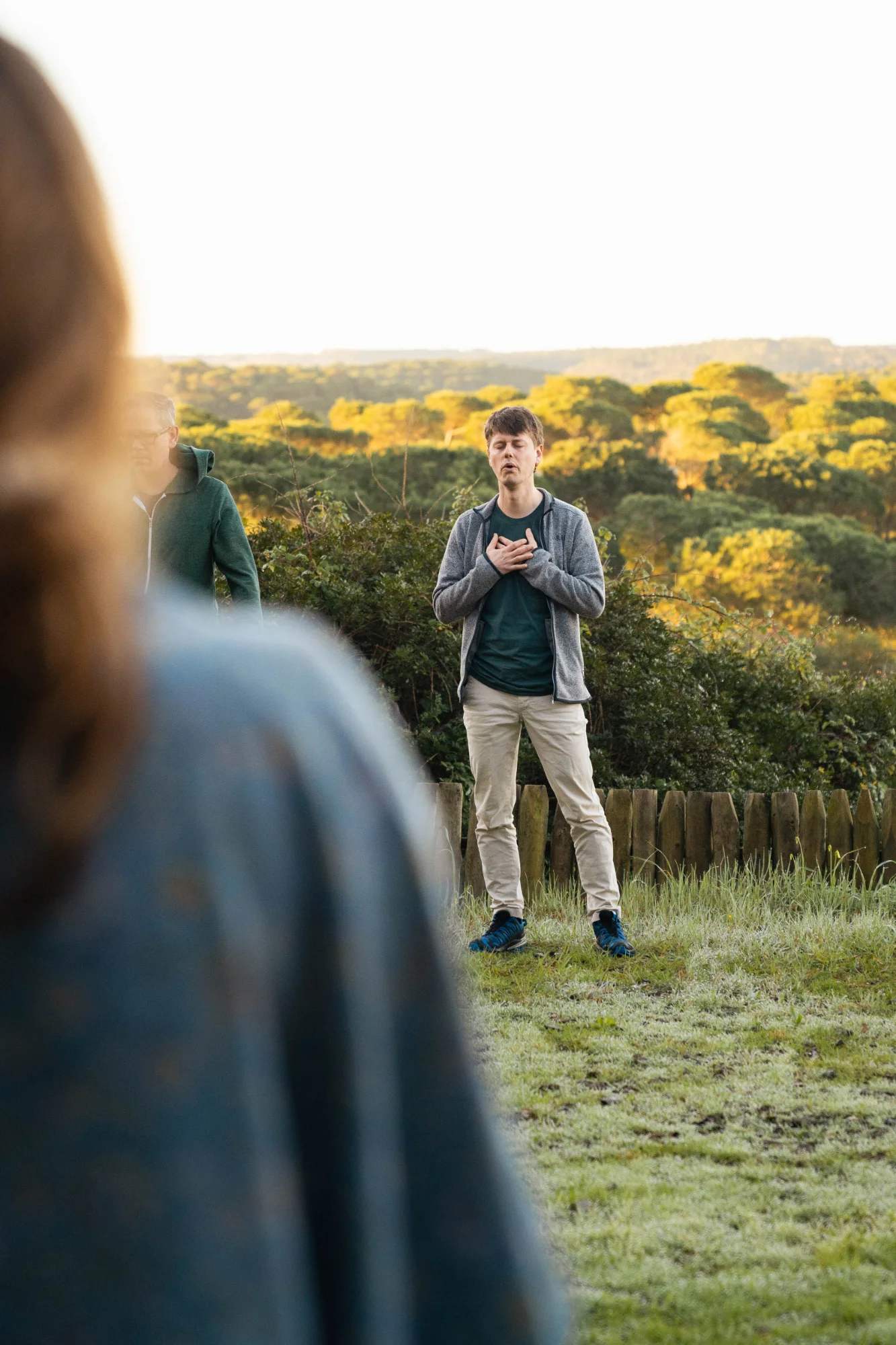
This is the final part of a longer story. It began with how the Authentic Singing Journey started, moved on to the journeys that followed, and then to the chapter I'd never told — losing Upala, and the Grief Course that grew from it. This is where it all became a practice.
After Upala's death, I grieved. I sounded. I howled.
I used my voice for all of it — the heartache, the wrenching pain, the gratitude for what had been, the love, the sheer devastation. My voice held it all in a safe expression: it let me truly acknowledge what I was feeling, and in that acknowledgment the pain could finally move.
And only then — through this sounding of my own — did I begin to understand what Upala had been showing me all those times when her speech left her, and she would simply sound what she felt. After more than a decade as a singing facilitator, I saw it: there was a way to use the voice in a fundamentally different way. A different modality entirely.
The problem? It had taken me over ten years to see the obvious — and the people I tried to explain it to were often just as bewildered as I had been. Our society looks for healing from the outside in: we receive sound healing, we chant a mantra and feel better. And yes — both work wonders. And still, there is something else. Something much simpler, much closer to our human evolution:
Making the sound of the body.
The body holds so much, and every day we live the effects of everything it has stored. That, in itself, is perfect — unless somewhere in all that stored energy there is unattended pain, buried grief, withheld anger, amplified fear. Then we're no longer living from what the present moment offers. We're living from a body that is reacting from the past.
Good luck being in the now if your body is stuck in the past. You can't think your way out of it — but you can sound your way toward it.
That is what somatic sounding is: giving a voice to what your body is holding. When you sound it, that stored energy is finally met — truly acknowledged, instead of pushed away. And little by little, you begin to feel whole again, and to live from that wholeness, instead of from the past.
It's a more precise way of describing what healing work actually is: making a new wholeness, by integrating the parts of yourself that had been cast into the shadow — still steering your daily actions, feelings and thoughts from there. Bringing them into the light doesn't rid you of the pain. It acknowledges it — and so the pain becomes a small part of a new, bigger whole, and instantly carries less weight.
Even the ego belongs in this story — the ego is really just your body's stored memory, in action. You don't get rid of it; you help it grow up. And a more mature ego is exactly what you want — mature enough that, one day, from lived and embodied experience, it realises that you are not a body that happens to be in the universe, but the universe itself, living as you for a while. And then, only then, does it move beyond itself. I'm drifting far now — but that's exactly the point. Somatic Vocal Healing touches all of these layers. It isn't only about healing. It's also about growing up into a more conscious human being.
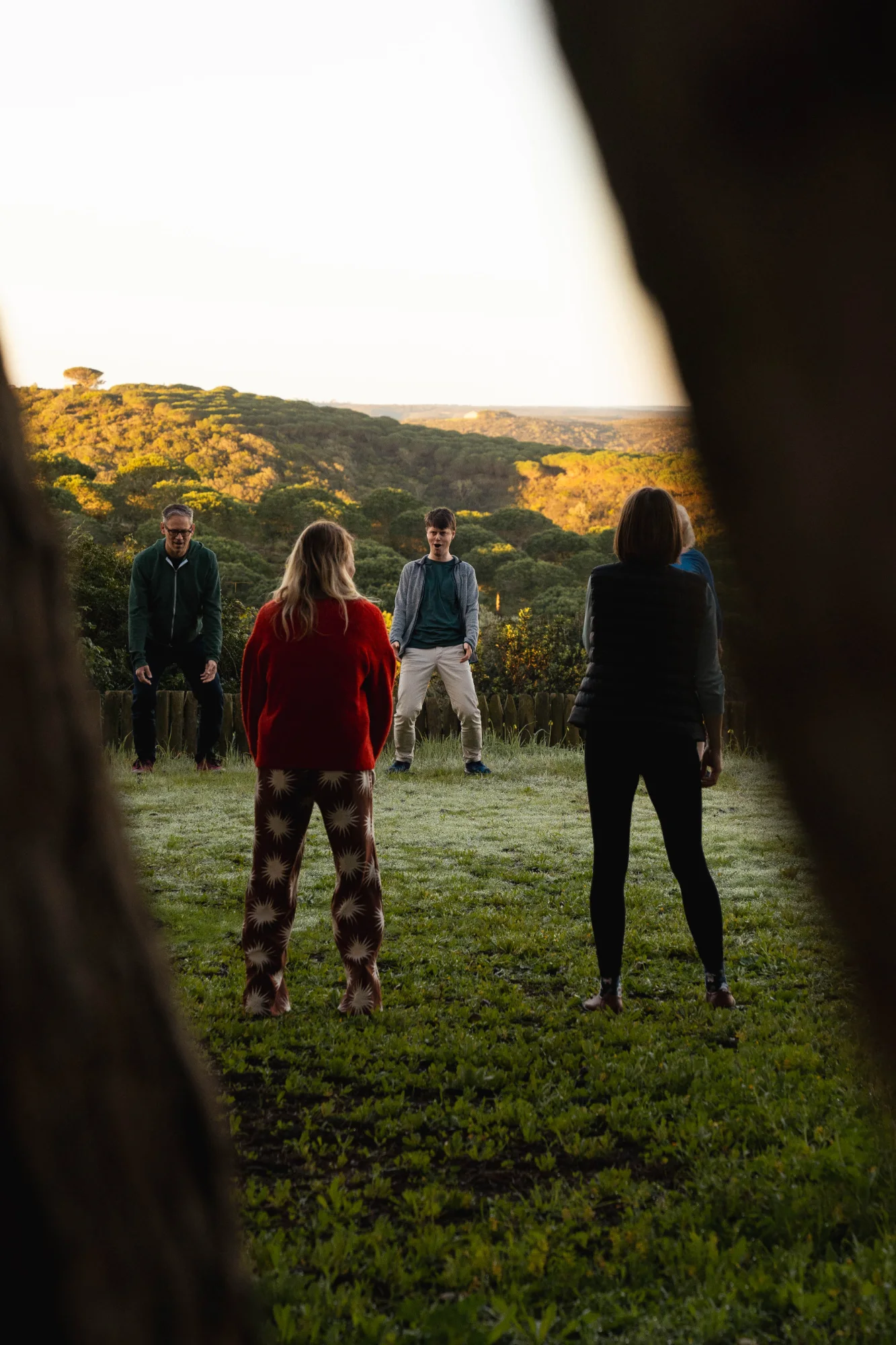
There is so much more I could write you — enough to fill a book:
- How the voice is the spokesperson of the nervous system
- How the somatic voice can steady you in a stressful moment, right as it happens
- How it can serve constellation work — even done by yourself, at home
- How it taps into our most primal, most instinctive way of regulating and expressing ourselves
All of it lives in the 12-week course — everything Upala showed me, everything the grief taught me, laid out step by step over twelve weeks, until you can hold the practice yourself.
The sound was always yours.
With love,
Jacob